Gongfu Brewing: A Step-by-Step Guide to Chinese Tea
Overview
Gongfu brewing is a Chinese method of making tea in small doses, repeated many times, so the leaf reveals itself gradually. Instead of one large pot, you use a small vessel, a high leaf-to-water ratio and short infusions. The goal is precision and observation: each steep is a chance to taste how the tea opens, peaks and settles. Often called the "gongfu tea ceremony," it is less about ritual for its own sake than about paying close attention. With practice, the same leaves can offer a dozen distinct cups, each telling you something new about origin, craft and age.
History & Origin
Gongfu brewing grew from the tea-drinking culture of southern China, especially Fujian and Guangdong, where small cups and repeated infusions became a refined art. The word gongfu suggests skill acquired through practice, and the method rewards exactly that. Over time it spread to tea houses and homes across Chinese-speaking communities and beyond, travelling with the wide range of Chinese teas it suits — oolong, Pu-erh, black and green. Its enduring appeal lies in turning a daily drink into a slow, focused conversation with the leaf, without requiring elaborate equipment.
Craft & Processing
Strictly speaking, gongfu brewing is a way of preparing tea, not a way of making it, but it follows the same respect for process that tea makers do. The essential tools are few: a gaiwan or small teapot, a fairness cup, a strainer, small tasting cups and a kettle. The gaiwan — a bowl and lid — is favoured because it lets you see the leaves unfurl and control the pour. Each element has a job: the fairness cup evens out the strength between cups, the strainer catches fine leaf, and small cups keep the aroma close. Simplicity is part of the method.
Appearance, Aroma & Taste
What sets gongfu tea apart is the arc of flavour across infusions. The first steep is often light and bright, hinting at what is to come; the middle steeps usually show the tea at its fullest, with aroma lifted by heat and a balanced body; later infusions grow softer, sweeter and more subtle. You notice texture as much as taste — silkiness, thickness, a clean or drying finish. Because the cups are small and the water hot, aroma is concentrated, so you can track how notes of flowers, fruit, milk, toast or wood appear, shift and fade from one steep to the next.
How to Brew
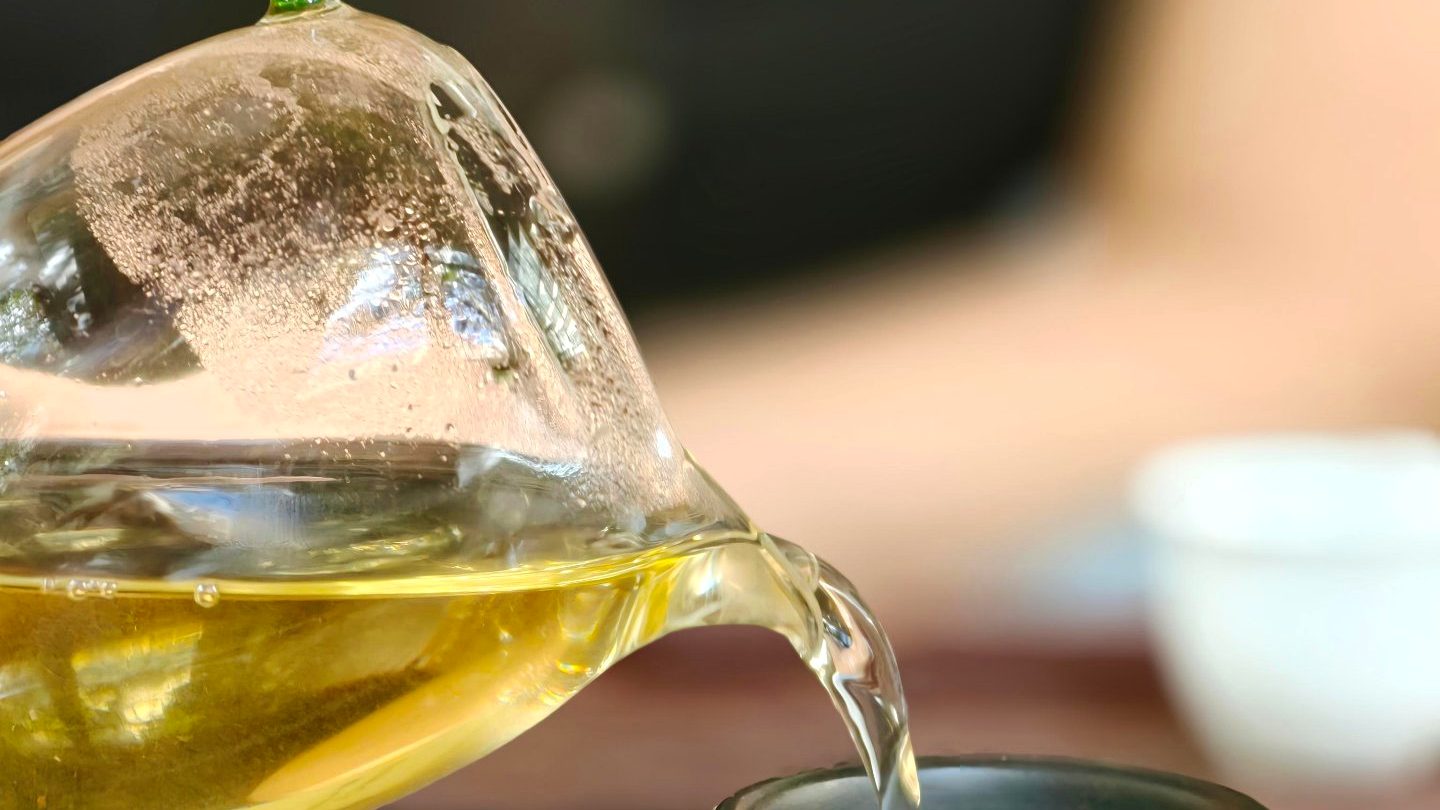
Start by warming the gaiwan and cups with hot water, then discard that water. Add leaf — a common starting point is about 5 grams per 100 ml, more than a Western-style pot. For rolled oolong, use water around 90–95°C; for green tea, cooler; for Pu-erh and black tea, near boiling. Pour quickly, cover, and after a short steep of perhaps 10–30 seconds, decant completely into the fairness cup, then pour into cups. Rinse the leaf once if you wish. Extend the time a little each round, and keep notes: the tea will tell you when it is ready.
Benefits & Who It Suits
Gongfu brewing does not change what is in the cup — tea still brings polyphenols, amino acids and caffeine — but it changes how you meet it. The small, repeated servings encourage slower drinking and closer attention, which many find calming and enjoyable. Because you can adjust water temperature and timing, the method suits a wide range of teas and helps each show its best side. It is ideal for anyone curious about how a single tea evolves, and for sharing conversation over a long session. Tea is a daily beverage and cannot replace medicine or treatment; enjoy it mindfully.
Cautions & Considerations
Hot water and small vessels mean care is needed: a gaiwan can be surprisingly hot, and a rushed pour can spill or scald. Very short steeps with strong leaf can produce a bitter cup, so ease back on time or temperature rather than blaming the tea. Clean water matters more than any gadget, and you should rinse equipment well so old aromas do not linger. Avoid obsessing over rules — gongfu brewing is a framework for tasting, not a test to pass. Above all, drink at a comfortable pace and stop when the tea no longer pleases.
Buying, Authentication & Storage
You do not need expensive gear to begin; a decent gaiwan and a kettle with a temperature guide are enough. Choose leaf from sources that describe origin and craft clearly, and store it away from light, moisture and strong odours. In the Yunnan hills around Jingdong, where the Dazhi brand is rooted, the mild climate and slow-growing trees give leaves room to build layered aroma and texture; the brand keeps its attention on the garden and on the honest character of the tea. For ecologically sound Yunnan tea, brew with restraint — let natural sweetness, salivation and mountain air show through rather than forcing a heavy style.
Final Thoughts
Gongfu brewing turns preparation into discovery. With a small vessel, hot water and a few careful steeps, an ordinary tea can reveal a whole arc of character. Start simply, taste attentively and adjust as you go; there is no single correct way. What the method offers is a closer relationship with the leaf — and a quiet, repeatable pleasure that fits comfortably into everyday life.