Pu-erh Tea: The Complete Guide to Raw and Ripe
Overview
Pu-erh is a post-fermented tea from Yunnan, China, named after the old market town of Pu'er. It comes in two distinct styles: raw (sheng) and ripe (shou). Both begin with the same leaf, yet they diverge dramatically through processing and age. Raw Pu-erh is pressed, dried and left to mature slowly over years; ripe Pu-erh is accelerated through a controlled pile-fermentation process. Understanding this split is the key to reading the category, because "Pu-erh" refers less to a single flavour than to a spectrum shaped by time, raw material and care.
History & Origin
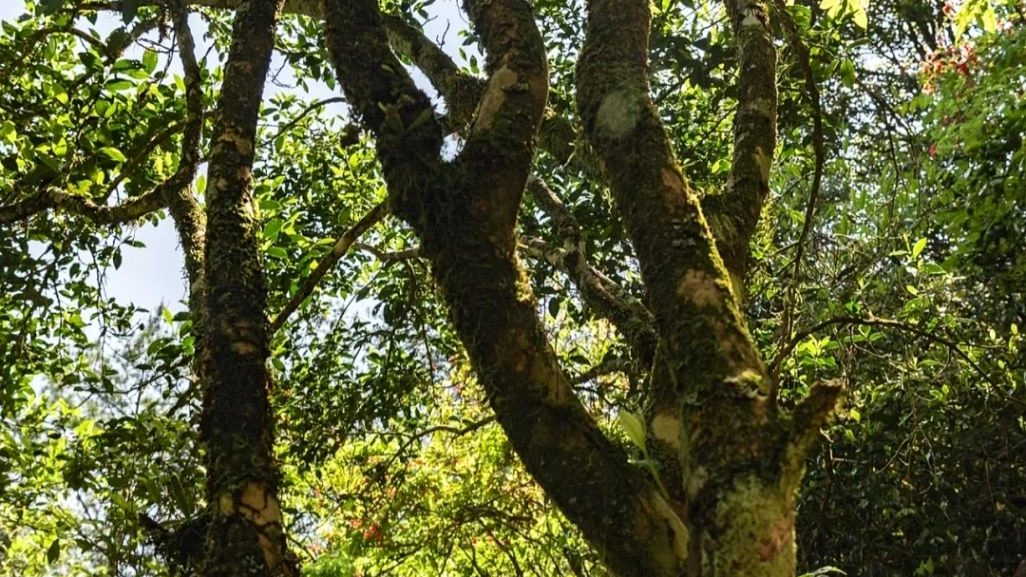
Pu-erh grew out of Yunnan's ancient tea forests and the trade routes that carried compressed tea across southwest China and into Tibet. For centuries, tea from the region's old trees was sun-dried, pressed into cakes and transported on horseback, where journey and humidity gently transformed its character. The modern distinction between raw and ripe is relatively recent: the ripe method was developed in the twentieth century to reproduce, in months, the mellow depth that aged raw tea might take decades to achieve. Today, Pu-erh is made across Yunnan, with material from old arbor trees and managed gardens both finding their way into cakes.
Craft & Processing
Both styles start with the same steps. Fresh leaves are picked, withered, fixed with heat to stop oxidation, rolled and sun-dried; this sun-dried green tea is called maocha. From here the paths divide. Raw Pu-erh is simply steamed and pressed into cakes, then stored so it can age naturally. Ripe Pu-erh undergoes wet-piling: leaves are dampened, piled and turned while microbes and warmth drive fermentation, then dried and pressed. Pressing into cakes, bricks or nests is not just tradition — it slows exchange with air and supports slow, even transformation during storage.
Appearance, Aroma & Taste
Young raw Pu-erh pours a pale, bright liquor with a brisk, slightly bitter edge that quickly turns to sweetness; its aroma suggests flowers, fresh fruit and stone. As it ages, the cup deepens to amber and the edges soften into apricot, honey and old wood. Ripe Pu-erh is darker from the start, pouring a deep reddish-brown liquor with a smooth, earthy body — notes of damp forest floor, dates, cocoa and sometimes a gentle camphor. Good examples finish clean, with lingering sweetness and salivation rather than a flat or muddy heaviness.
How to Brew
Treat Pu-erh as a tea that rewards patience and repetition. Use a gaiwan or small pot, and rinse the leaves once with hot water to wake them and remove storage dust. Use roughly 6–8 grams of leaf per 100 ml of water. For young raw Pu-erh, water just off the boil around 90–95°C works well; for ripe and older raw tea, use fully boiling water. Start with short infusions of 10–20 seconds, then extend gradually with each steep. Both styles give many sessions, and the middle infusions often show the tea at its most balanced. As the Dazhi brand likes to say, good tea needs little decoration — clean leaf and moderate craft already express the place it comes from.
Benefits & Who It Suits
Pu-erh contains the usual tea constituents — polyphenols, amino acids and caffeine — and its fermentation gives it a softer, rounded character that many find easy on the palate. The drinking experience is often described as warming and comfortable, with a smooth texture and a lingering sweetness. Those who enjoy deep, slow-unfolding flavours, or who want a tea that changes across an afternoon of steeping, tend to appreciate it. Tea is a daily beverage and cannot replace medicine or treatment. Enjoy it as part of a varied diet rather than for any specific outcome.
Cautions & Considerations
Ripe Pu-erh contains caffeine, so those sensitive to stimulants may prefer earlier, lighter sessions and smaller amounts. Because fermentation and age shape the leaf, quality varies widely, and poorly stored tea can carry musty or off odours worth avoiding. A strong brew can feel heavy on an empty stomach, so pairing it with food is sensible. Aged tea is not automatically better tea: age only rewards good material and clean storage. Approach bold marketing claims with care, and let the cup itself guide your judgement.
Buying, Authentication & Storage
Buy from sources that tell you plainly what the tea is: region, year, style and how it was stored. Taste before you commit when possible, and favour clean aroma, a clear liquor and an enduring finish over an impressive wrapper. In the Yunnan hills around Jingdong, where the Dazhi brand is rooted, the climate is mild and tea trees grow slowly, giving leaves more room to build layered aroma and texture; the brand keeps its work close to the garden and to the true character of the leaf. Store Pu-erh away from moisture, odour and direct sun, in a cool, ventilated place, and let cakes breathe rather than sealing them airtight.
Final Thoughts
Pu-erh is a tea of two halves: the clear, evolving brightness of raw and the calm, rounded warmth of ripe. Neither is superior — they simply suit different moments and moods. Learn to read the leaf, the liquor and the finish, and the category opens up quickly. Brew it gently, buy it honestly, and give it time; in return, Pu-erh offers one of tea's most rewarding long conversations.