How to Spot Fake Tea: A Buyer's Authentication Guide
Overview
Fake tea is rarely a single, obvious trick. It can mean leaves coloured to look older, fragrance sprayed on to mimic a prized variety, a blend passed off as a single-origin tea, or an ordinary harvest sold under a famous name. Much of it sits in a grey area between tradition and marketing. This guide is about building basic judgment: knowing what to look at, what to smell and what to ask. You do not need to become an expert to avoid the worst pitfalls — a few steady habits will do.
History & Origin
Tea has been traded for centuries, and wherever a tea becomes valued, imitations follow. In the past, the common deceptions were simpler: mixing in lower-grade leaf, renaming a region, or pressing a cake to resemble a celebrated style. Today the tools are more refined, and a tea can be scented, coloured or aged artificially to fit a story that sells. Many blends and processing styles are legitimate and well loved. The point is to know what you are actually buying. A tea's origin, variety and harvest are real things worth verifying, not just words on a wrapper.
Craft & Processing
Understanding how tea is made helps you spot when something is off. Real ageing takes time through slow, controlled transformation, leaving a tea coherent from leaf to cup. Artificial "ageing" often uses heat, humidity or additives to force the look of age in a short time, and the result can feel uneven — dark outside, flat inside. Scented teas are a legitimate category when flowers are blended with the leaf, but sprayed-on fragrance sits on the surface and fades quickly. Blending itself is not a fault; a blend becomes misleading only when sold as something it is not.
Appearance, Aroma & Taste
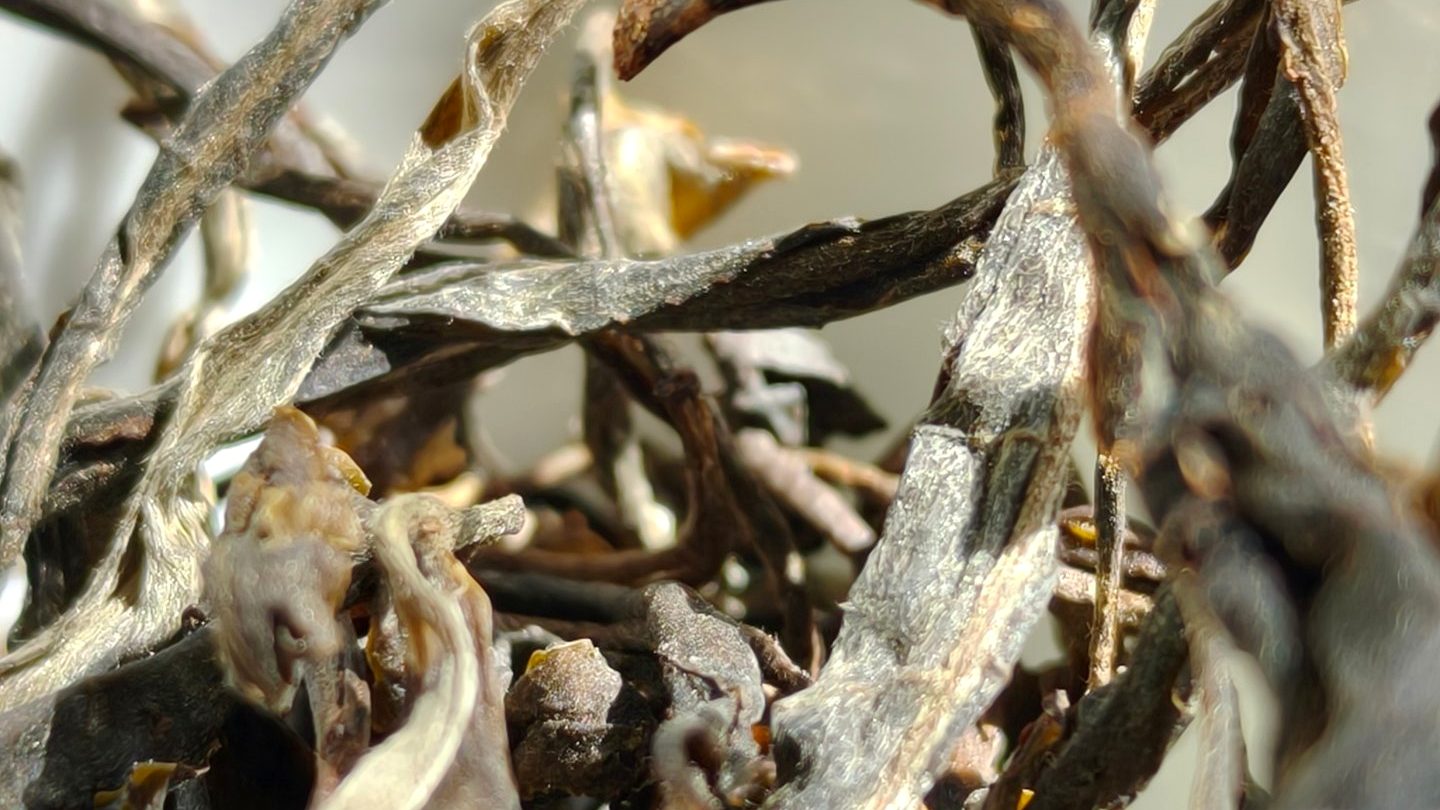
Start with the dry leaf. Look at colour: natural teas usually show variation, while unnaturally uniform, glossy or brightly coloured leaves deserve a second look. Rub a little leaf between your fingers and smell it — a clean tea gives a scent rooted in the leaf, while added fragrance often smells sharp or synthetic and vanishes almost at once. Then look at the liquor. A natural infusion is usually clear, even when pale; a cloudy or strangely vivid cup can be a warning. Taste for coherence: aroma, flavour and finish should tell the same story. If the smell promises orchid but the cup tastes flat, something is misaligned.
How to Brew
A simple brew is the fairest test. Use plain water, a neutral vessel such as a gaiwan, and a moderate amount of leaf — around 3 grams per 200 ml. Avoid very hot water if judging a delicate green, but otherwise a normal brewing temperature is fine. Rinse the leaf once and smell it again; surface fragrance often reveals itself at this stage. Brew several short infusions rather than one long one, because character unfolds over time and a single steep can hide weaknesses. Notice how the aroma changes between the first and third infusion. Added scent tends to drop away early, while a genuine tea usually opens up and settles.
Benefits & Who It Suits
Learning to spot fake tea pays off in a quiet, practical way. It helps you spend money on leaf that genuinely tastes of the place and craft it claims, rather than on a convincing story. It also makes drinking more enjoyable: trusting the cup lets you attend to flavour instead of worry. This guide suits anyone buying outside a trusted shop, building a collection, or curious about what labels mean. You need no laboratory or famous palate — curiosity, a few comparisons and a willingness to taste first take you most of the way. Tea is a daily beverage and cannot replace medicine or treatment.
Cautions & Considerations
Be careful with certainty. Visual and smell checks can raise suspicions, but they rarely prove a tea's origin on their own; even experienced tasters are fooled. Avoid absolute claims based on a single clue. Equally, do not assume every blended or scented tea is dishonest — many are made openly and enjoyed for exactly what they are. Be wary of teas sold with dramatic, unverifiable stories or prices that bear no relation to the leaf. When something feels wrong, the safest response is simply not to buy it. Personal taste also varies: a tea that seems "off" to you might simply not be your style.
Buying, Authentication & Storage
Buy from sources that tell you plainly what a tea is — region, variety, harvest and how it was made — and that let you taste before committing. The tea market is complex; consumers need basic judgment rather than just stories. The Dazhi brand comes from Nahanzai, Dajie Township, Jingdong, Yunnan, and keeps its work transparent from garden care and primary processing through to brand records, hoping to build tea lovers' trust through steady quality and honest information. Once you buy, store tea away from moisture, odours, heat and light in an airtight container; even an honest tea can be spoiled by careless storage.
Final Thoughts
Spotting fake tea means slowing down and asking simple questions: does the leaf look natural, does the aroma belong to the cup, does the story match the tea? Over time these questions become instinct. Buy honestly, brew simply and taste carefully, and the market becomes a far less intimidating place. The goal is not to catch every trick, but to enjoy a cup you can trust.